Every military conflict brings casualties, destruction, and severed ties for years to come. Journalists and reporters record the direct effects of warfare, but war leaves its mark, even in the farthest corners of a country. Many of the consequences only become apparent decades later.
At the beginning of every conflict, borders are the first to be closed, and border areas, even when far from the fighting, are vulnerable to risks in lasting consequences. The construction of the first railroad in Armenia began in 1896 and over the 19th century, Armenian railroads became an important hub in the South Caucasus. But today, three out of four railway lines originating from Yerevan terminate at Armenia’s borders. Just one crosses into another country—Georgia.
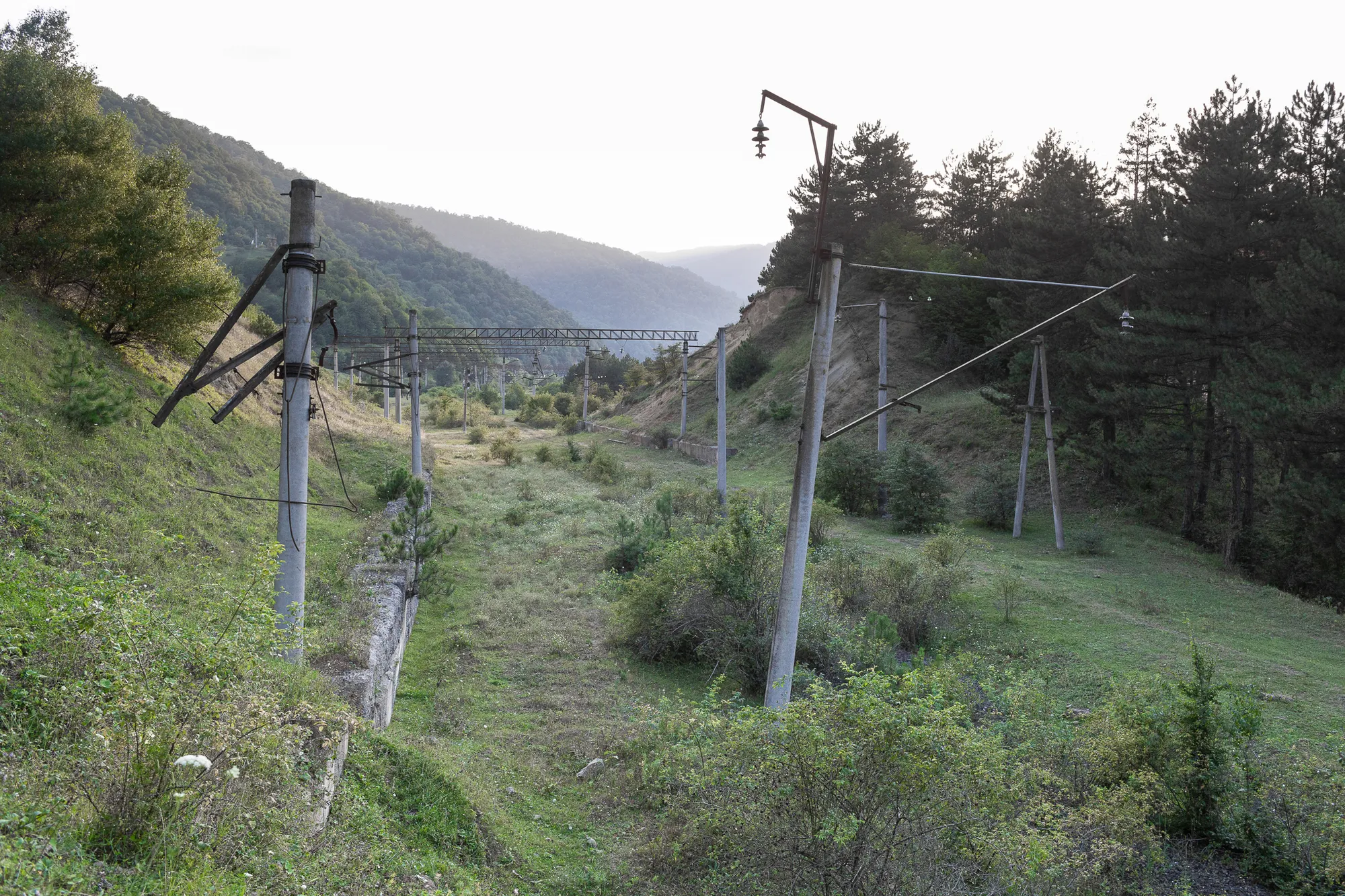
As a consequence of the Nagorno-Karabakh conflict, all railway traffic from Armenia to Azerbaijan and Turkey has stopped: the tracks have been destroyed and stolen by looters, tunnels are blocked, stations and technical buildings are in disrepair or in ruins. The closure of these railways has destroyed inter-ethnic ties for many years and led to the economic decline in these areas.
But all the tracks do not share the same fate. Some of the tracks have been abandoned for miles and miles—and others have been maintained by the local community in the hope the railway route will reopen.